What Your Camera Choice Says About You (Wedding Videographer Edition)
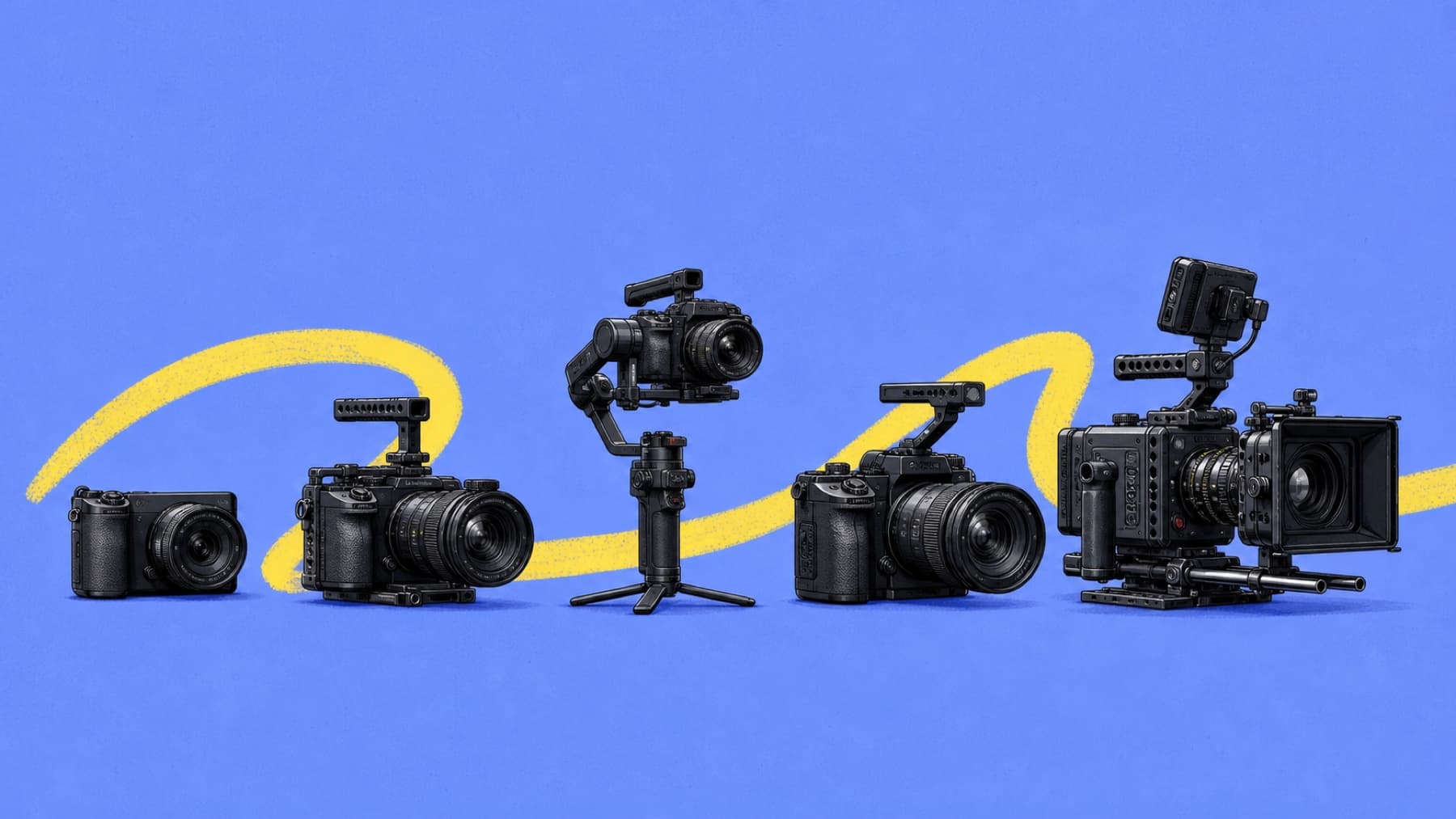
Camera people love to say the camera does not matter. Then someone sets a Sony, Canon, Lumix, Nikon, RED, and Blackmagic body on the same table and suddenly everyone has a 20-minute monologue ready.
Your camera choice does not define your talent. It does, however, reveal what kind of inconvenience you are willing to defend online.
This is a personality test, not a spec-sheet verdict. Every one of these systems can make a beautiful wedding film. We are simply here to lovingly profile the person behind it.

This article expands on the original Lemlii Instagram carousel. If you recognize yourself immediately, please know that we wrote this with affection. Mostly.
Sony: The Pragmatist

You did not choose a personality. You chose a tool. At least, that is what you tell everyone.
You wanted dependable autofocus, a familiar ecosystem, and a compact body that could survive a ceremony, a portrait session, and a dark reception without becoming the main character. You probably researched every option, built a spreadsheet, watched twelve comparison videos, and arrived at the same answer as half the filmmakers in your group chat.
That does not make you boring. It makes you practical. You know the best camera on a wedding day is often the one that lets you stop thinking about the camera. While everyone else debates colour science, you are already packed up and backing up cards.
You still look at every new announcement, of course. Not because you are tempted. You are just staying informed. The browser tab with a trade-in estimate is completely unrelated.
Your real personality: Calm, efficient, suspicious of unnecessary risk, and always carrying one more battery than everyone else.
Canon: The Artist

You care about the image before you care about the chart.
Maybe you talk about skin tones. Maybe you describe the image as warm, natural, or simply Canon. Whatever the language, you know what you like when you see it. You would rather spend an evening refining a grade than arguing about which camera won a laboratory test.
You also have a soft spot for cameras that feel like cameras. The menus make sense to you. The colours feel familiar. The lens collection has been growing for long enough that changing systems now would require a financial advisor and a brief period of mourning.
There is a decent chance your films are polished, emotional, and slightly more expensive than the local average. There is also a decent chance you have stared longingly at the Cinema EOS line and decided that wanting something is basically the first stage of budgeting for it.
Your real personality: Visual, particular, quietly sentimental, and willing to pay more when something feels right.
Lumix: The Loyalist

You were there early. You remember when the GH series felt like a secret weapon: compact bodies, serious video tools, great value, and stabilization that made handheld wedding coverage feel possible without turning every shoot into gimbal day.
You also remember defending the autofocus. We do not need to reopen that chapter. You learned how to work around it, pre-focus, stop down, anticipate movement, and confidently explain that real filmmakers pull focus manually anyway.
Staying with Lumix was never blind loyalty. You kept getting practical features that mattered to working shooters, and you already knew the system inside out. Switching would have meant replacing lenses, rebuilding muscle memory, and admitting that one person in the comments might have had a point.
Now your patience looks a lot less stubborn. The system has kept evolving, your lens shelf is still useful, and you get to enjoy the rarest feeling in camera ownership: being rewarded for not panic-switching.
Your real personality: Patient, resourceful, value-conscious, and deeply committed once trust has been earned.
Nikon: The Contrarian

While the rest of the wedding industry argued between the two obvious choices, you did the math for yourself.
You looked past the popularity contest and found capable hybrid bodies, serious internal recording options, and a system that kept becoming more interesting while everyone else was busy repeating the same old Nikon-is-for-stills joke. You do not need the most common camera. You need the camera that makes sense to you.
Some of you arrived because the newer bodies offered exactly the feature mix you wanted. Others are still carrying brand loyalty from the DSLR years like a family heirloom. Your first real camera may have been a Nikon, and apparently that bond is stronger than logic, resale value, or peer pressure.
The best part is that the contrarian choice is becoming less contrarian. You were not following a trend. You were simply early to the moment when everyone else started paying attention again.
Your real personality: Independent, analytical, slightly smug when proven right, and immune to the phrase “everyone shoots Sony now.”
RED or Blackmagic: The Cinematographer

Let us be honest: you do not merely bring a camera. You bring a rig.
There is a monitor, a cage, a handle, a battery solution, at least one cable that has to be ordered from a specialist website, and enough mounting points to attach a small espresso machine. You chose a cinema-first workflow because codecs, monitoring, rigging, and deliberate operation are part of the fun.
Does that make a twelve-hour wedding day easier? Not always. But you did not come here for easy. You came here for an image that feels like it belongs on a narrative set. If that means managing heavier files and explaining your setup to three curious uncles during cocktail hour, so be it.
You say weddings are the perfect training ground for narrative filmmaking: no second takes, unpredictable light, real emotion, and constant pressure. Deep down, though, you are still waiting for someone to fund the feature script. Until then, the couple gets the most cinematic first dance anyone has ever seen.
Your real personality: Ambitious, technical, image-obsessed, and physically incapable of leaving a camera unrigged.
What Your Camera Actually Says About You
The joke works because every camera system represents a different set of trade-offs. One person wants speed and reliability. Another wants a specific image. Someone else values stabilization, internal recording, lens history, or the ability to build a tiny cinema cart beside the dance floor.
None of those choices automatically makes the film better. Your camera probably says less about your talent than it does about your tolerance for inconvenience.
The useful question is not, Which brand has the best specs? It is: Which system helps me work confidently when the timeline slips, the light disappears, and the vows begin before I am ready?
The best camera is the one you know well enough to stop thinking about when the moment matters.
And yes, we know we missed your favourite brand. That probably says something about you too.
See the original carousel on Instagram, then send it to the videographer who has been trying to convince you to switch systems for the last three years.